Arteck Slim Stainless Steel Wireless vs Arteck Full-Size Stainless Steel Bluetooth (2026): Key Differences
As an Amazon Associate we earn from qualifying purchases. Links on this page are affiliate links.
When you compare the arteck 2 4g wireless keyboard stainless vs hb192 universal bluetooth, you see two stainless steel options with similar build quality and battery life. Both models offer a rechargeable lithium battery that lasts up to six months. The main difference lies in how they connect to your devices. One uses a dedicated 2.4GHz USB receiver, while the other relies on Bluetooth for multi-device switching. This distinction changes how you set them up and which computers they work with best.
Key differences
| Aspect | Arteck Slim Stainless Steel Wireless Keyboard | Arteck Full-Size Stainless Steel Bluetooth Keyboard |
|---|---|---|
| Connectivity | 2.4GHz wireless via nano USB receiver | Bluetooth |
| Form Factor | Compact layout (11.1 x 5.3 inches) | Full-size layout with number pad (16.9 x 4.9 inches) |
| Device Switching | Single device connection | Connects to three devices simultaneously |
| Weight | 10.8 ounces | not listed |
| Thickness | 0.16 inches | 0.6 inches |
Which one should you choose?
Choose Arteck Slim Stainless Steel Wireless Keyboard if
- You need a compact keyboard that fits easily into a laptop bag
- You prefer a plug-and-play setup without pairing steps
- You want the thinnest possible profile for your desk
Choose Arteck Full-Size Stainless Steel Bluetooth Keyboard if
- You need a full-size keyboard with a number pad for data entry
- You switch between multiple devices like a PC, tablet, and phone
- You want to connect wirelessly without using a USB port
Verdict: Choose the Arteck Slim if portability and a minimal footprint are your priorities. Pick the Arteck HB192 if you require a number pad and the ability to manage multiple devices seamlessly. Both share durable stainless steel construction and long battery life.
Connectivity and Form Factor Comparison
Connectivity type
Product A uses a 2.4GHz wireless connection via a nano USB receiver. You plug this receiver into your computer to use the keyboard instantly. This method is standard for many desktop setups. Product B relies on Bluetooth technology instead. It connects wirelessly without needing a USB dongle. This allows for a cleaner desk setup if your device supports Bluetooth directly. Both methods offer wireless freedom, but the connection protocols differ significantly. You must choose based on whether you prefer a dedicated receiver or native Bluetooth pairing.
Device switching
Product B allows you to connect to three different devices simultaneously. You can switch between these three devices with a single key click. This feature is useful if you share a keyboard between a desktop, laptop, and tablet. The data for Product A does not mention multi-device connectivity or switching capabilities. It appears designed for a single connection at a time. If you frequently move between multiple computers or tablets, Product B offers a distinct workflow advantage. Product A lacks this specific multi-device flexibility in the provided specifications.
Form factor and size
Product A is described as ultra-slim and compact. It measures 11.1 inches in length and weighs 10.8 ounces. It provides full-size keys in a smaller footprint. Product B is a full-size keyboard with a number pad. It measures 16.9 inches in length and 4.9 inches in width. The height is 0.6 inches, which is thicker than Product A's 0.16 inches. Product B includes arrow keys and a number pad, which Product A may lack or integrate differently. Your choice depends on whether you need a numpad and have desk space for a larger keyboard.
Compatibility
Product B supports four major operating systems: iOS, Android, Mac OS, and Windows. It works with computers, laptops, iPads, iPhones, and Android tablets. This broad compatibility makes it versatile for mixed-device households. Product A lists Windows as the operating system in its attributes. It does not explicitly mention support for Mac, iOS, or Android in the provided data. If you use a Mac or mobile devices, Product B is the safer choice. Product A may be limited to Windows systems based on the available specifications.
Battery life
Both keyboards feature a rechargeable lithium battery with similar performance claims. Each model offers up to six months of battery life on a single charge. This rating is based on two hours of non-stop use per day. Both include a USB charging cable for power replenishment. The battery specifications are identical in duration and power source type. Neither product claims a longer lifespan or faster charging time in the provided data. You can expect comparable maintenance schedules for both keyboards.
Which keyboard suits your workflow best
Users needing multi-device switching
Product B connects to three devices simultaneously via Bluetooth. You switch between them with a single key press. This is ideal for switching between a computer, tablet, and phone. Product A requires manual re-pairing or a dedicated receiver for each device, making multi-device workflows slower and more cumbersome for your daily tasks.
Users preferring a compact footprint
Product A measures 11.1 by 5.3 inches and weighs 10.2 ounces. It fits easily into bags and small desks. Product B is larger at 16.9 by 4.9 inches and lacks weight specs. If you travel often or have limited desk space, the smaller dimensions of Product A offer better portability and storage convenience.
Users needing a number pad
Product B is a full-size keyboard that includes a number pad and arrow keys. This layout supports data entry and navigation without extra peripherals. Product A is a slim model that omits these keys. If you frequently input numbers or prefer standard navigation keys, Product B provides the complete layout you need for efficient work.
The products compared
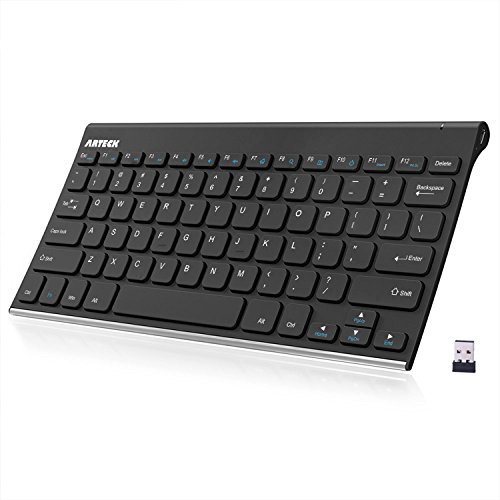
Arteck Slim Stainless Steel Wireless Keyboard
Best for: Single Windows desktop setups
- Connectivity
- 2.4GHz wireless
- Case Material
- Stainless steel
- Color
- Black
- Operating System
- Windows
- Power Source
- Rechargeable
- Dimensions
- 11.1 × 5.3 × 0.16 inches
View on Amazon: Arteck Slim Stainless Steel Wireless Keyboard Affiliate link
This Arteck keyboard uses 2.4GHz wireless connectivity via a nano USB receiver. It features a stainless steel case and ultra-slim dimensions of 0.16 inches thick. The rechargeable battery lasts up to six months with regular use. You get a full-size layout in a compact, lightweight package. It is designed for desktops and laptops running Windows.
Pros
- 2.4GHz wireless connection with nano receiver
- Stainless steel case for durability
- Ultra-slim 0.16-inch profile
- Rechargeable battery with 6-month life
- Full-size keys in compact body
Cons
- No Bluetooth connectivity for multi-device switching
- Limited to Windows operating systems
- Single device connection only
Good fit if
- You prefer a stable 2.4GHz wireless connection
- You want a durable stainless steel build
- You need a full-size keyboard for one computer
Skip if
- You need to switch between multiple devices
- You require Bluetooth connectivity
- You use a Mac or Linux system
Verdict: Arteck Slim Stainless Steel Wireless Keyboard is a solid choice for Windows users who prioritize a durable, slim profile and reliable 2.4GHz wireless performance over multi-device flexibility.

Arteck Full-Size Stainless Steel Bluetooth Keyboard
Best for: Users needing a full-size layout with number pad
- Form Factor
- Full size
- Connectivity
- Bluetooth
- Case Material
- Stainless steel
- Operating System
- Windows
- Power Source
- Rechargeable
- Dimensions
- 16.9 × 4.9 × 0.6 inches
View on Amazon: Arteck Full-Size Stainless Steel Bluetooth Keyboard Affiliate link
This full-size wireless keyboard features a stainless steel case and Bluetooth connectivity. It supports switching between three devices with a single click. The low-profile keys include a number pad and arrow keys for standard typing layouts. A rechargeable battery offers up to six months of use on a single charge. It works with Windows, Mac OS, iOS, and Android devices, making it suitable for multi-device setups.
Pros
- Connects to three devices simultaneously
- Stainless steel full-size body with number pad
- Switches between devices with one click
- Six-month battery life on a single charge
Cons
- Bluetooth only, no 2.4G wireless option
- Full-size footprint requires more desk space
- Heavier build due to stainless steel material
Good fit if
- You need a number pad for data entry
- You switch between multiple Bluetooth devices
- You prefer a durable stainless steel finish
Skip if
- You require 2.4G wireless connectivity
- You need a compact or portable layout
- You want a lighter aluminum or plastic build
Verdict: Arteck HB192 Full-Size Bluetooth Keyboard suits users who need a full-size layout with a number pad and multi-device switching. It is ideal for stationary desks where Bluetooth connectivity is sufficient.
Specifications side by side
| Spec | Arteck Slim Stainless Steel Wireless Keyboard | Arteck Full-Size Stainless Steel Bluetooth Keyboard |
|---|---|---|
| Form Factor | not stated | Full size |
| Connectivity | 2.4GHz wireless | Bluetooth |
| Case Material | Stainless steel | Stainless steel |
| Color | Black | Stainless Steel |
| Operating System | Windows | Windows |
| Power Source | Rechargeable | Rechargeable |
| Dimensions | 11.1 × 5.3 × 0.16 inches | 16.9 × 4.9 × 0.6 inches |
| Weight | 10.8 ounces | not stated |
| Model | HW086 | not stated |
Frequently asked questions
Which keyboard is better for a small desk?
The Arteck Slim Stainless Steel Wireless Keyboard is the better choice for limited space. Its compact dimensions measure 11.1 inches in length and 5.3 inches in width. The slim profile is only 0.16 inches high. This allows it to fit neatly into tighter workspaces without taking up much room.
Does the HB192 have a number pad?
Yes, the Arteck Full-Size Stainless Steel Bluetooth Keyboard includes a number pad. It is designed as a full-size layout to accommodate numeric input. This makes it suitable for users who frequently enter data or use spreadsheet applications that require the standard numpad section on the right side.
How do I connect the slim model to my PC?
You connect the Arteck Slim Stainless Steel Wireless Keyboard using a 2.4GHz wireless nano USB receiver. You plug the receiver into a USB port on your computer. This method provides a stable connection without needing to pair via Bluetooth settings. It is ideal for straightforward desktop setups.
Can I switch between devices on the full-size model?
The Arteck Full-Size Stainless Steel Bluetooth Keyboard supports multi-device switching. You can connect it to multiple devices simultaneously via Bluetooth. This feature allows you to switch between your computer, tablet, or phone with ease. It is designed for users who need flexibility across different platforms.
What is the weight difference between the two keyboards?
The Arteck Slim Stainless Steel Wireless Keyboard weighs 10.8 ounces. The full-size model is heavier due to its larger size and additional keys. The slim version is lighter and more portable. This weight difference makes the slim model easier to move or store when not in use.
Are both keyboards compatible with Windows?
Yes, both the Arteck Slim and Full-Size models are compatible with Windows. They are designed to work seamlessly with Windows operating systems. You do not need additional drivers for basic functionality. Both keyboards provide standard input methods that integrate well with Windows desktop environments.
How thick is the slim stainless steel keyboard?
The Arteck Slim Stainless Steel Wireless Keyboard is extremely thin. Its height is only 0.16 inches. This ultra-slim design contributes to its sleek appearance and portability. It sits flat on your desk without adding significant bulk to your workspace setup.